Your Fitbit Air saw every stride. Now you can too.
The Air records your pace, heart rate and sleep on every run, phone or no phone. The Google Health app shows you a fraction of it. This shows you all of it, and adds a coach that tells you how hard to run today.
The demo is the real app with 12 weeks of a sample runner's data. No sign-in, nothing to install.
Leave the phone at home.
Most Fitbit Air runs happen with nothing in your pocket. That means no GPS, and the Google Health app stops at a total. This app doesn't.
Splits from your stride
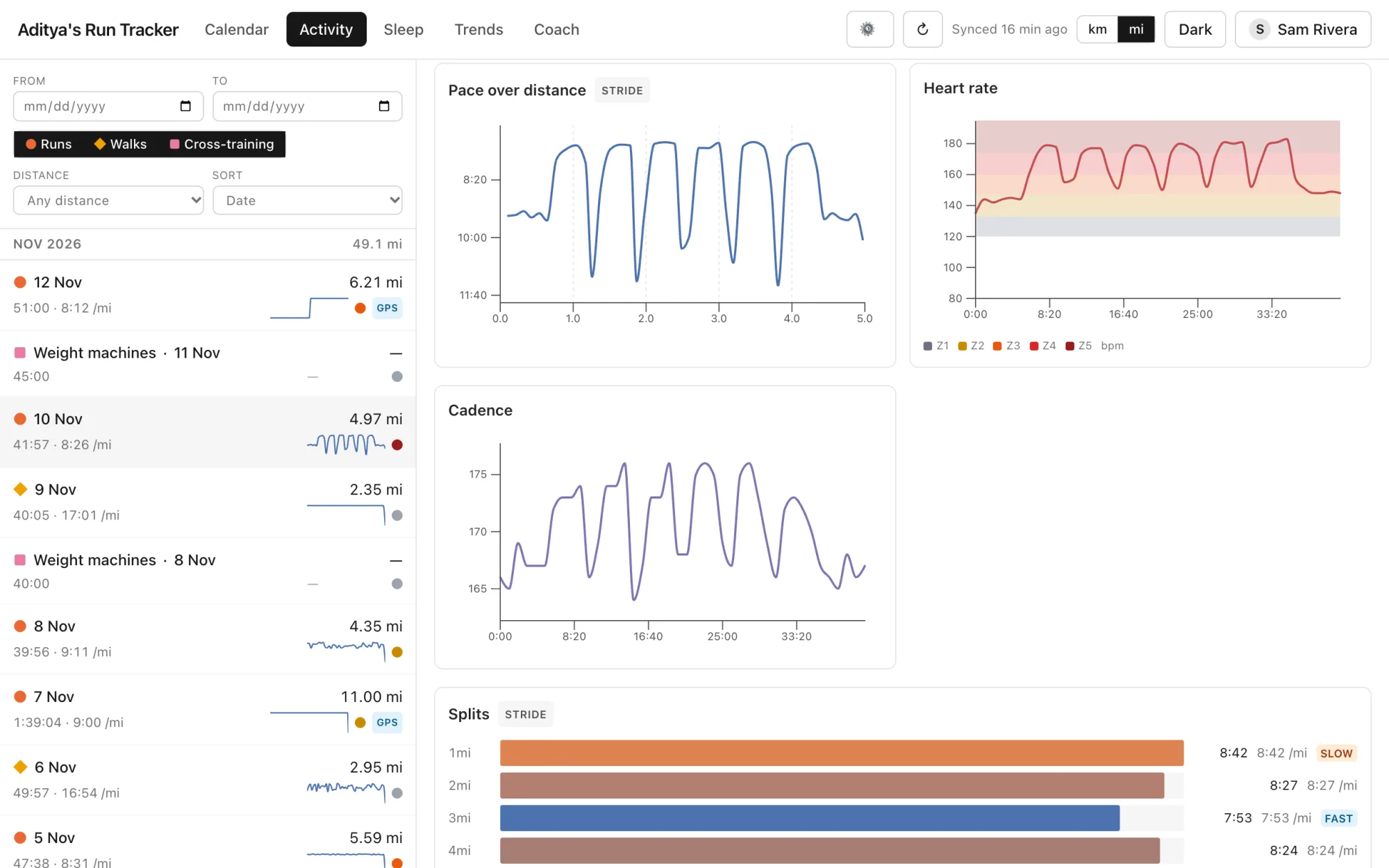
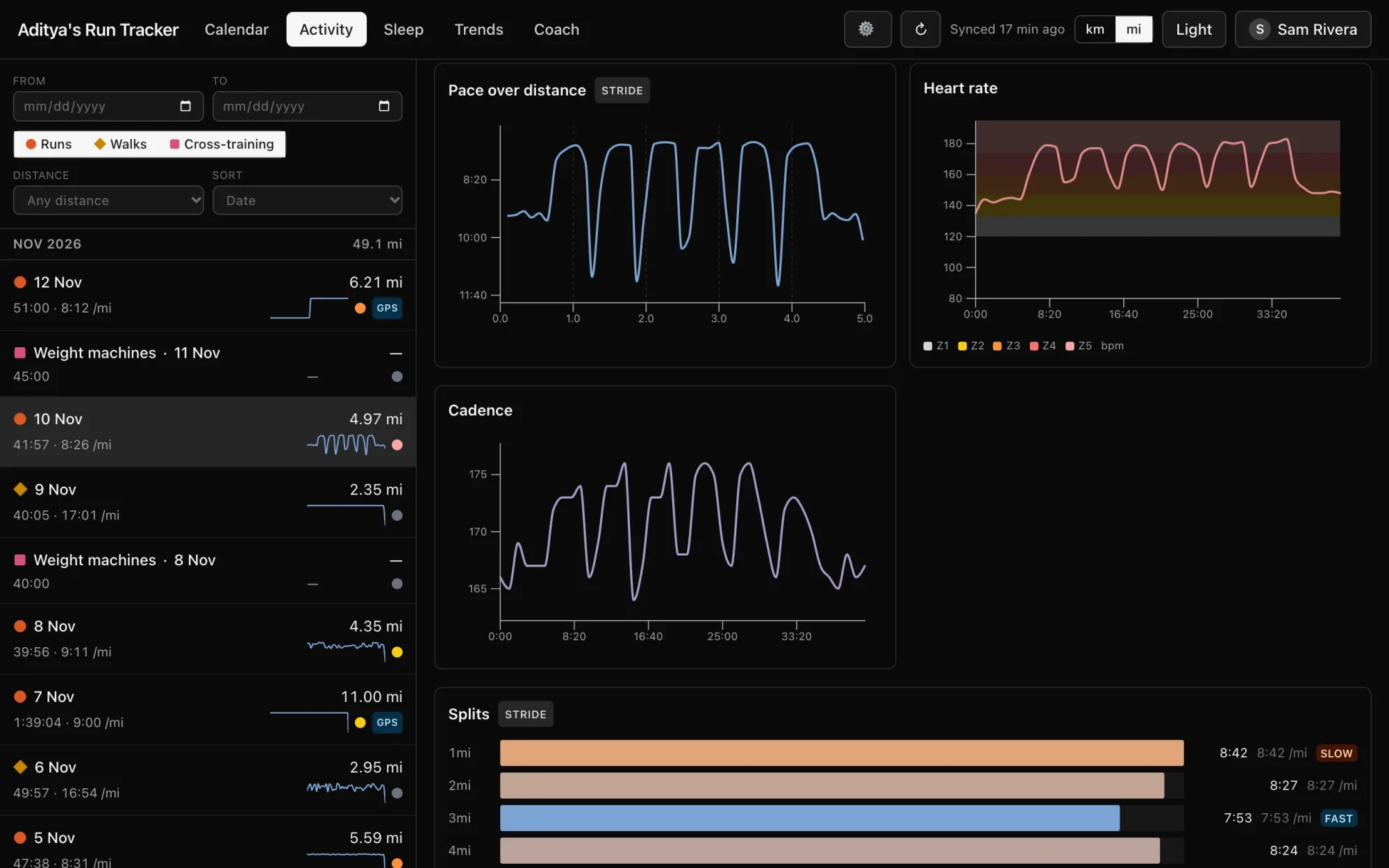
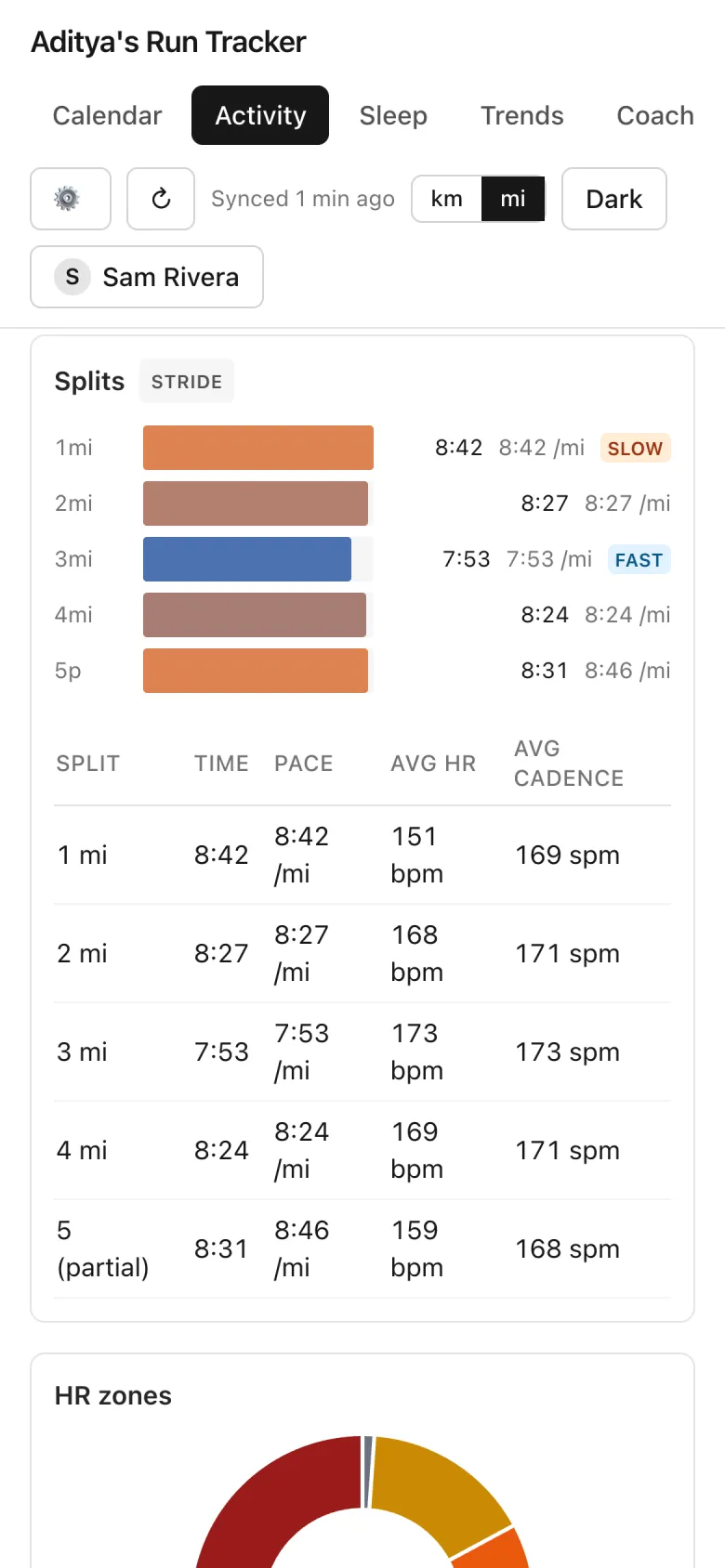
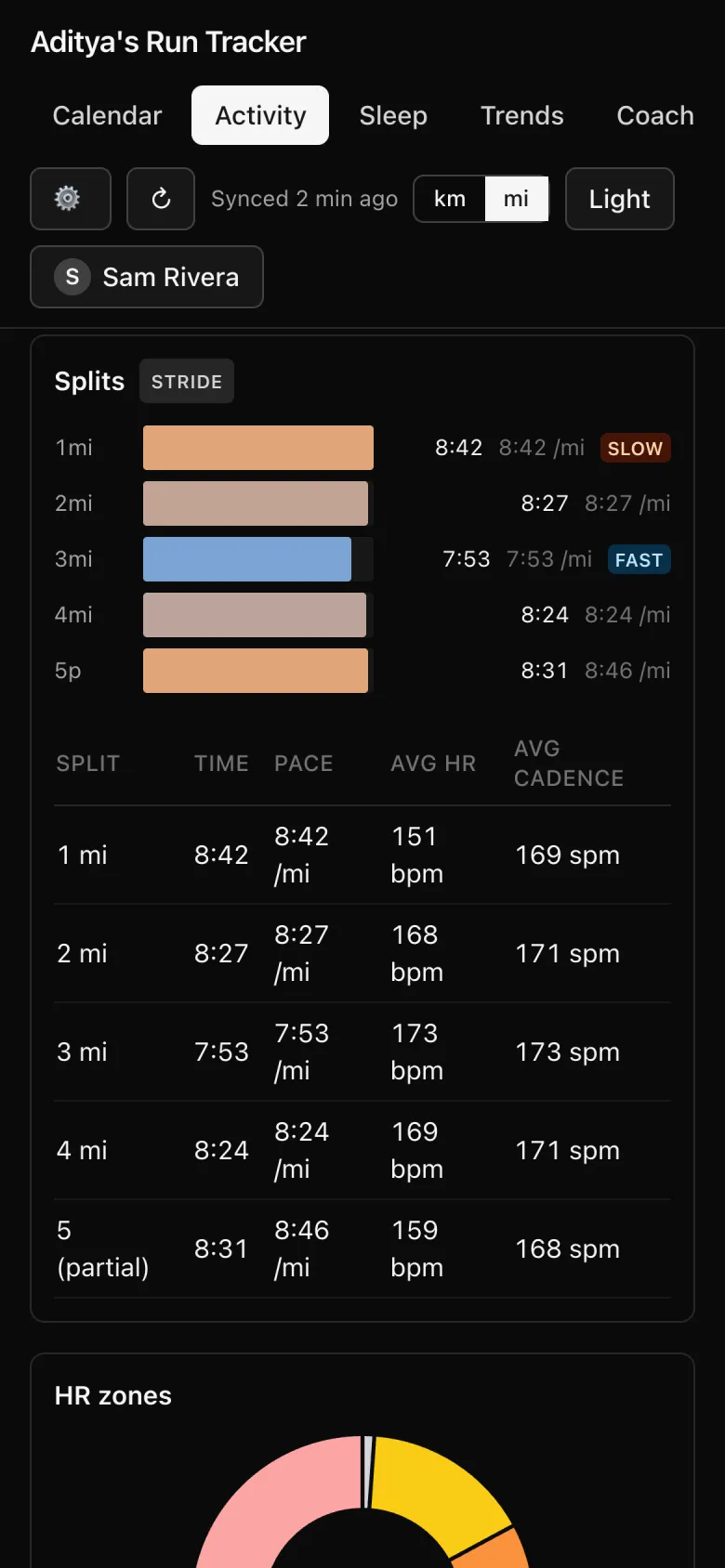
Every mile or kilometre is rebuilt from the Air's step counter, with pace, heart rate and cadence for each one. It's the same distance your Air reports, split properly.
Route, map and climb
On days you carry your phone, the run picks up GPS distance, a route map and elevation gain. Nothing to switch on.
Every mile, split.
Open any run and see how it actually went, not just how far.
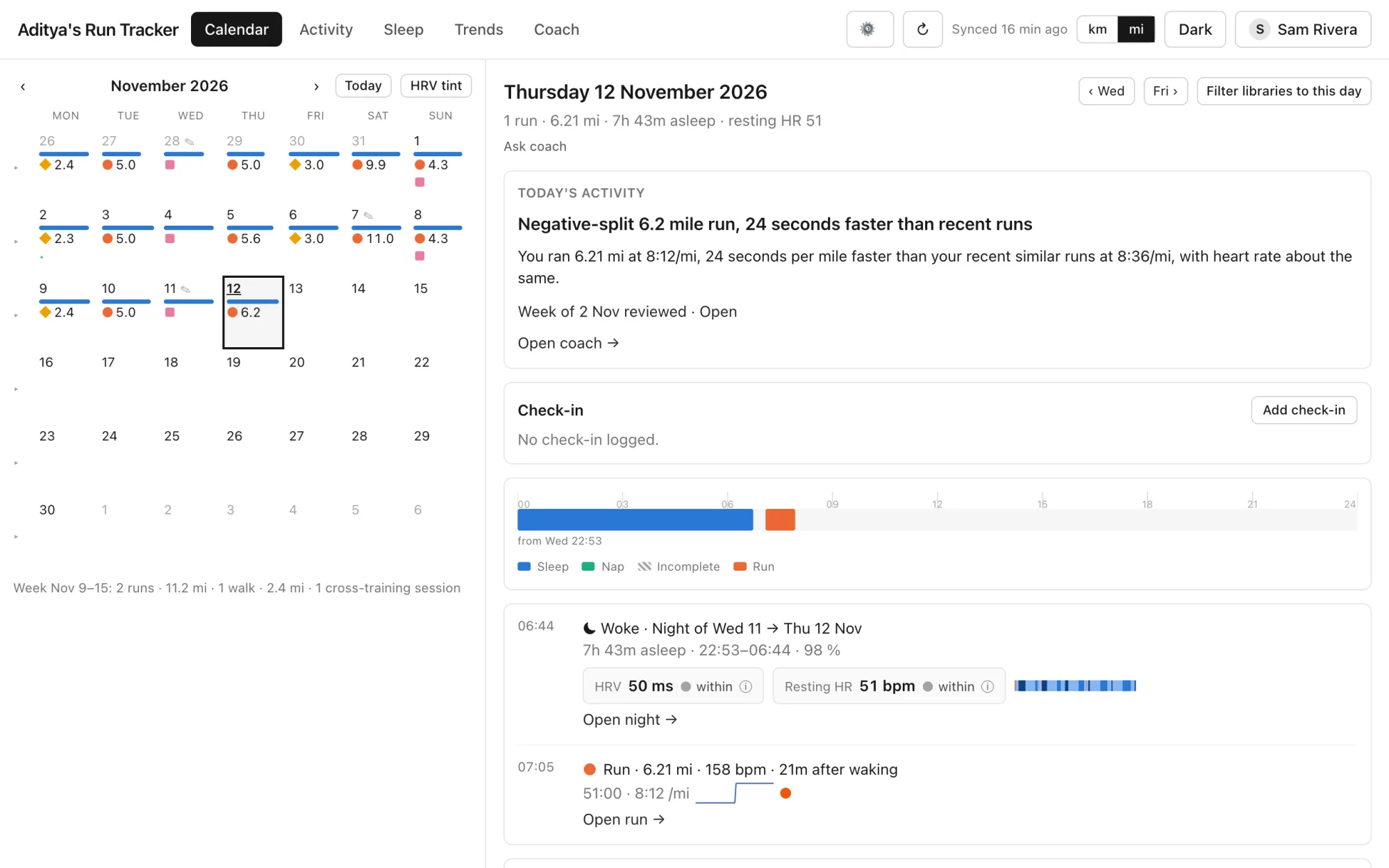
- Splits per mile or per km, with your fastest and slowest marked.
- Pace, heart rate and cadence across the run, shaded by heart-rate zones worked out from your own max and resting heart rate.
- Sleep before, recovery after. The night before and the two nights after sit right on the run.
- Walks and gym sessions appear next to your runs and count toward your training load.
Did last night recover you?
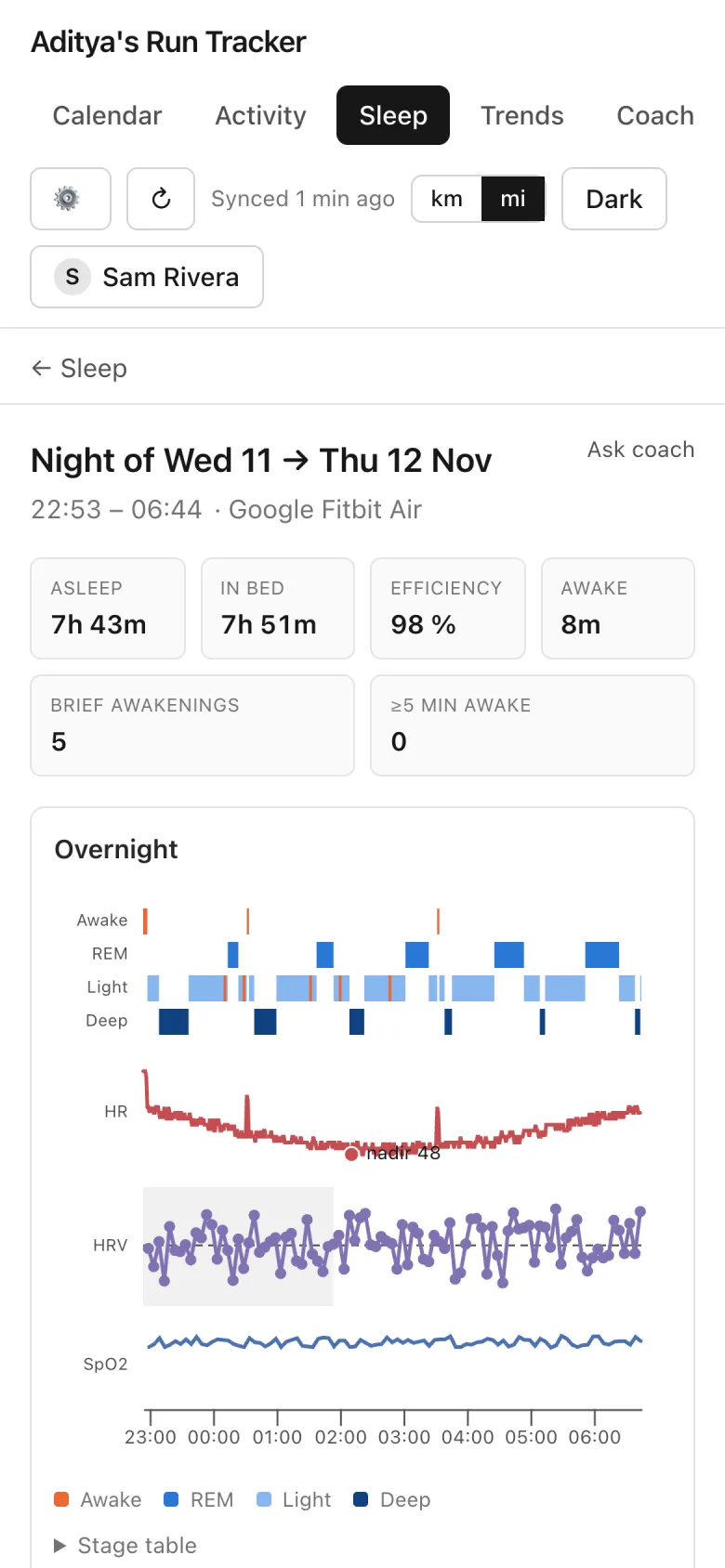
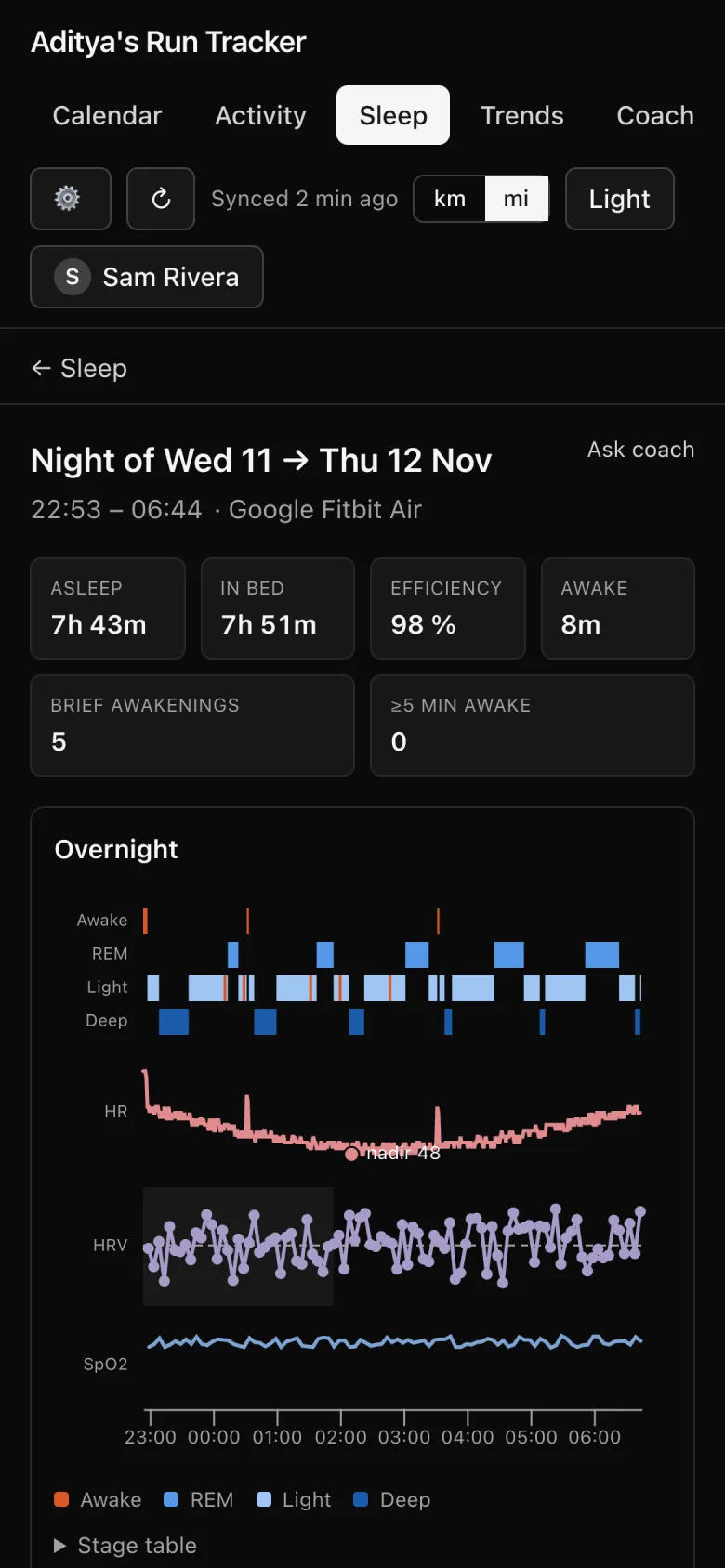
The Air tracks your sleep every night. Here each night is compared with your own normal, so you know whether to push or back off.
- The whole night on one chart: sleep stages, heart rate, HRV and blood oxygen.
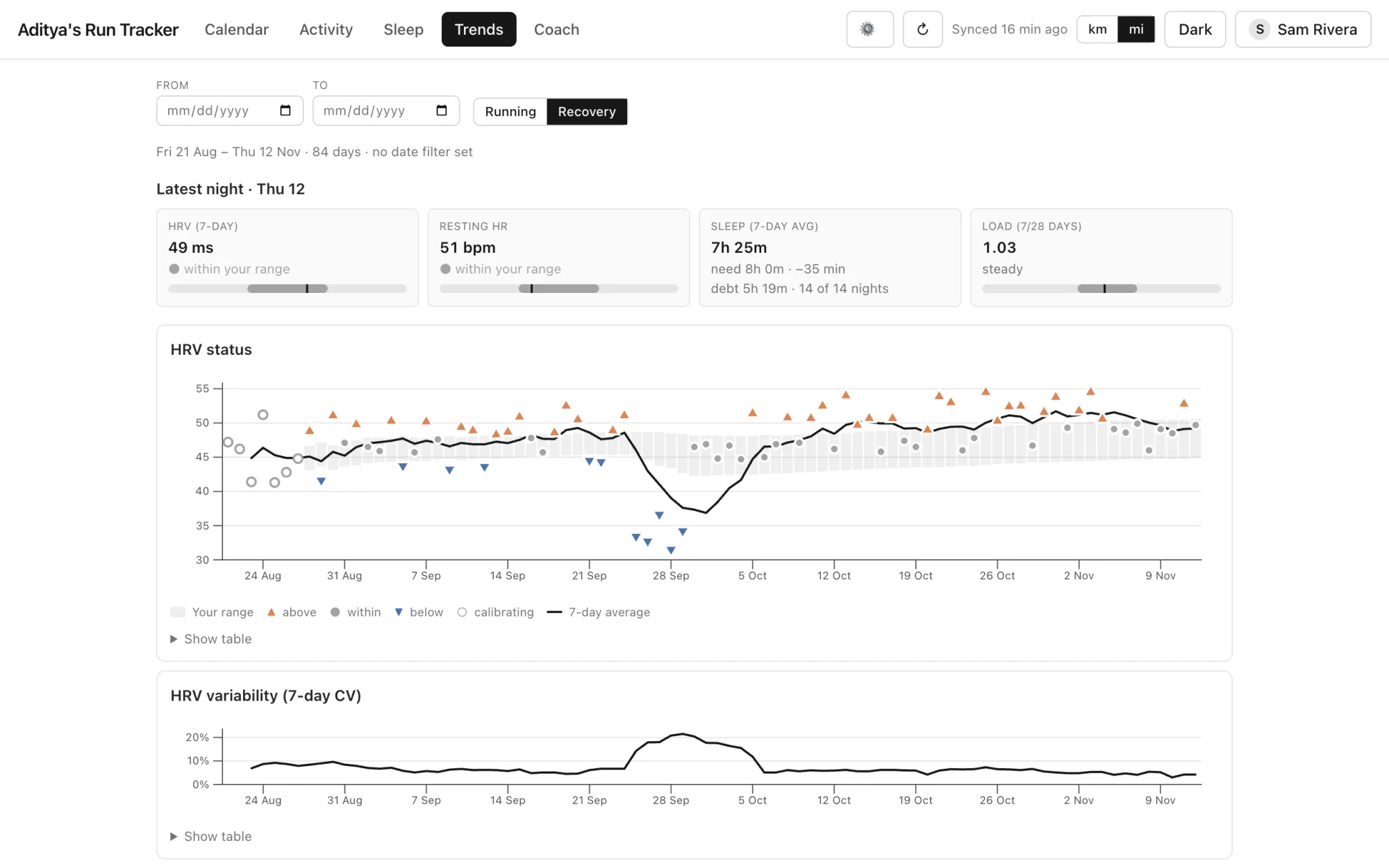
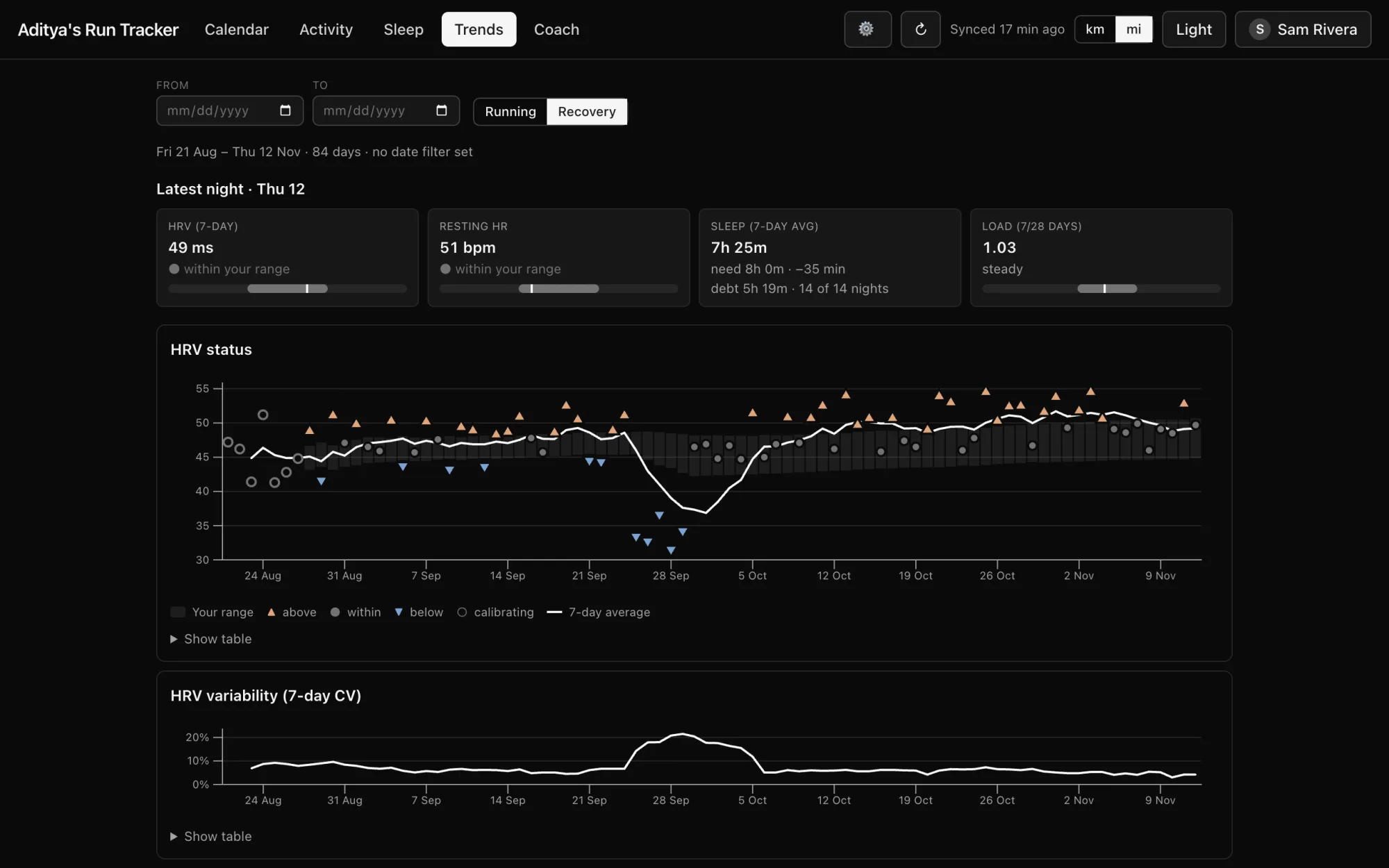
- HRV and resting heart rate marked above, within or below the range your last 60 nights set.
- Sleep debt against the amount of sleep you say you need, plus bedtime regularity and naps.
- Training load next to HRV, so you can see what a big week does to you.
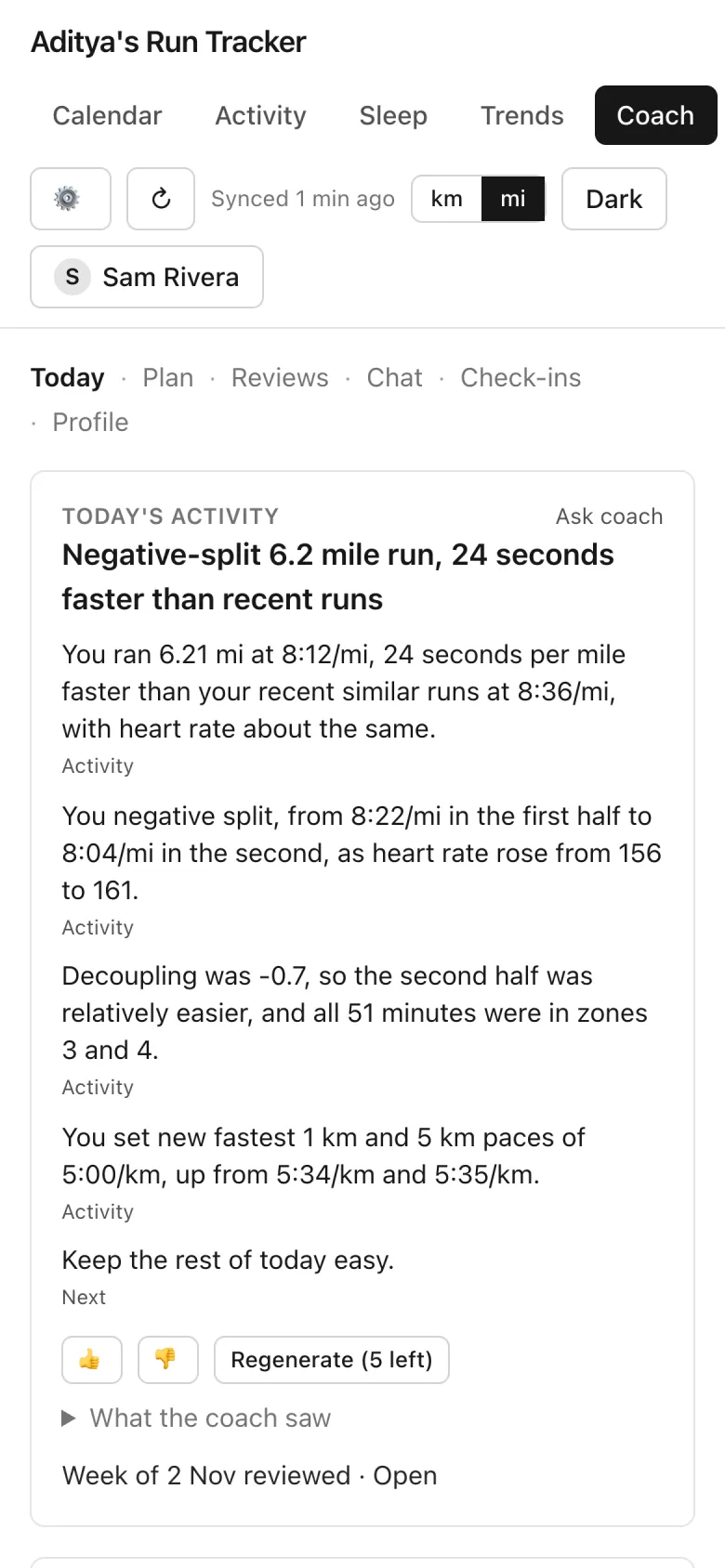
A coach that has read every run and every night.
Each morning it makes one call from fixed rules over your data. Then the AI explains it in plain words, and every number it writes is checked against your data before you see it.
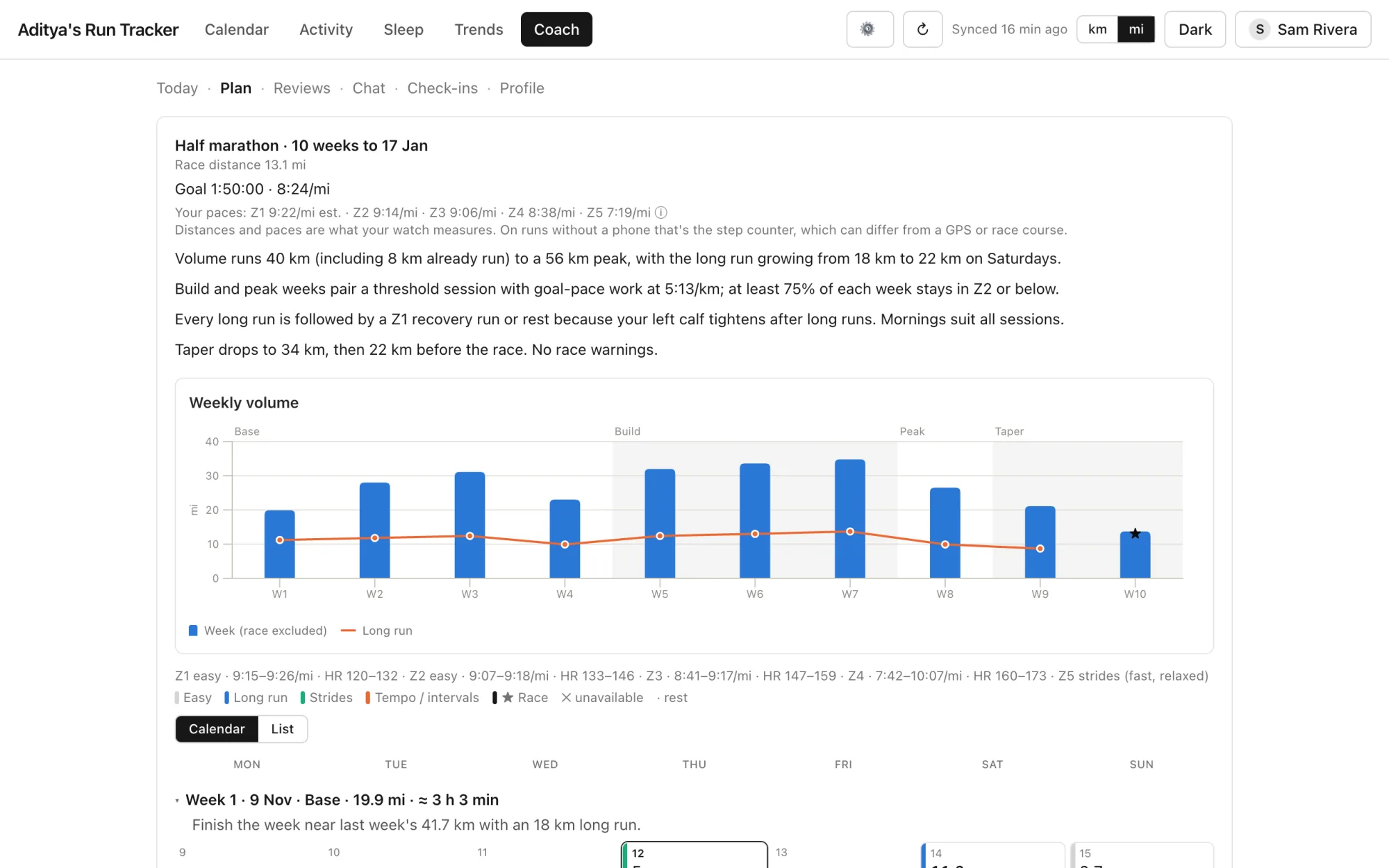
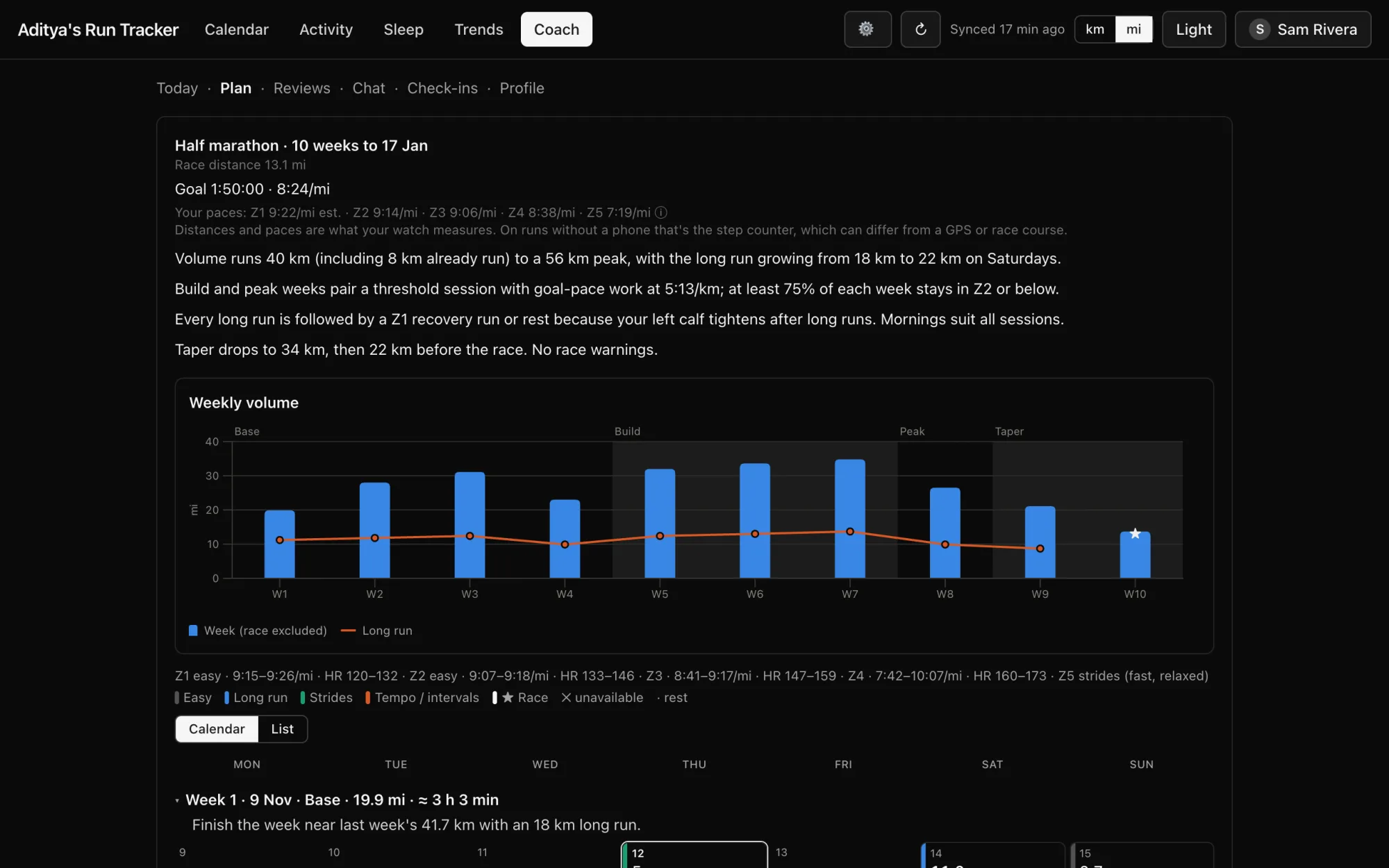
Plans in miles and paces, set from how you run
Train for a 5K, 10K, half, marathon or any distance up to 42.2 km, or just build a base. Every session has a distance and a target pace for each heart-rate zone, taken from your own runs.
The plan keeps up. Runs you did get ticked off, a missed long run moves to another day, and after signs of illness it backs off for a few days before building again.
A debrief after every run
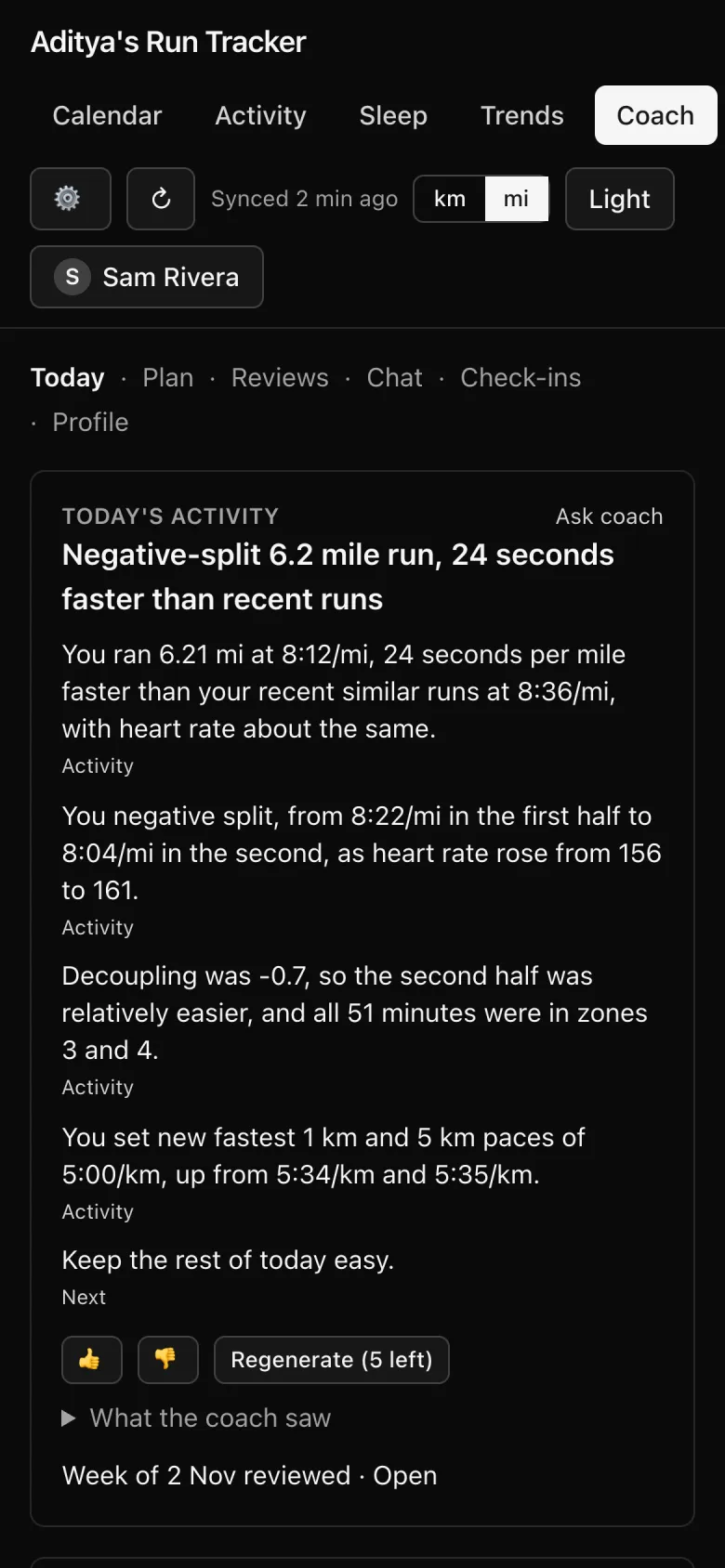
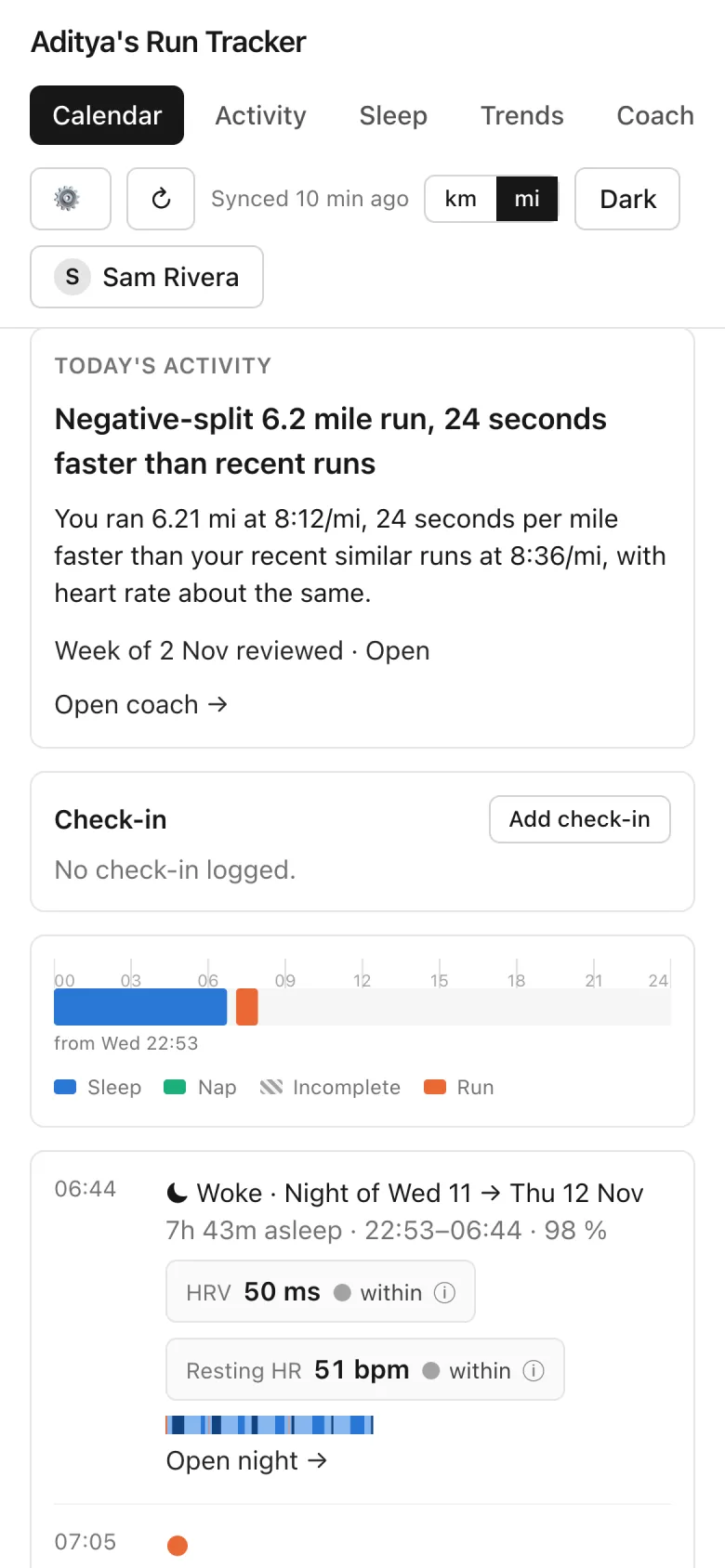
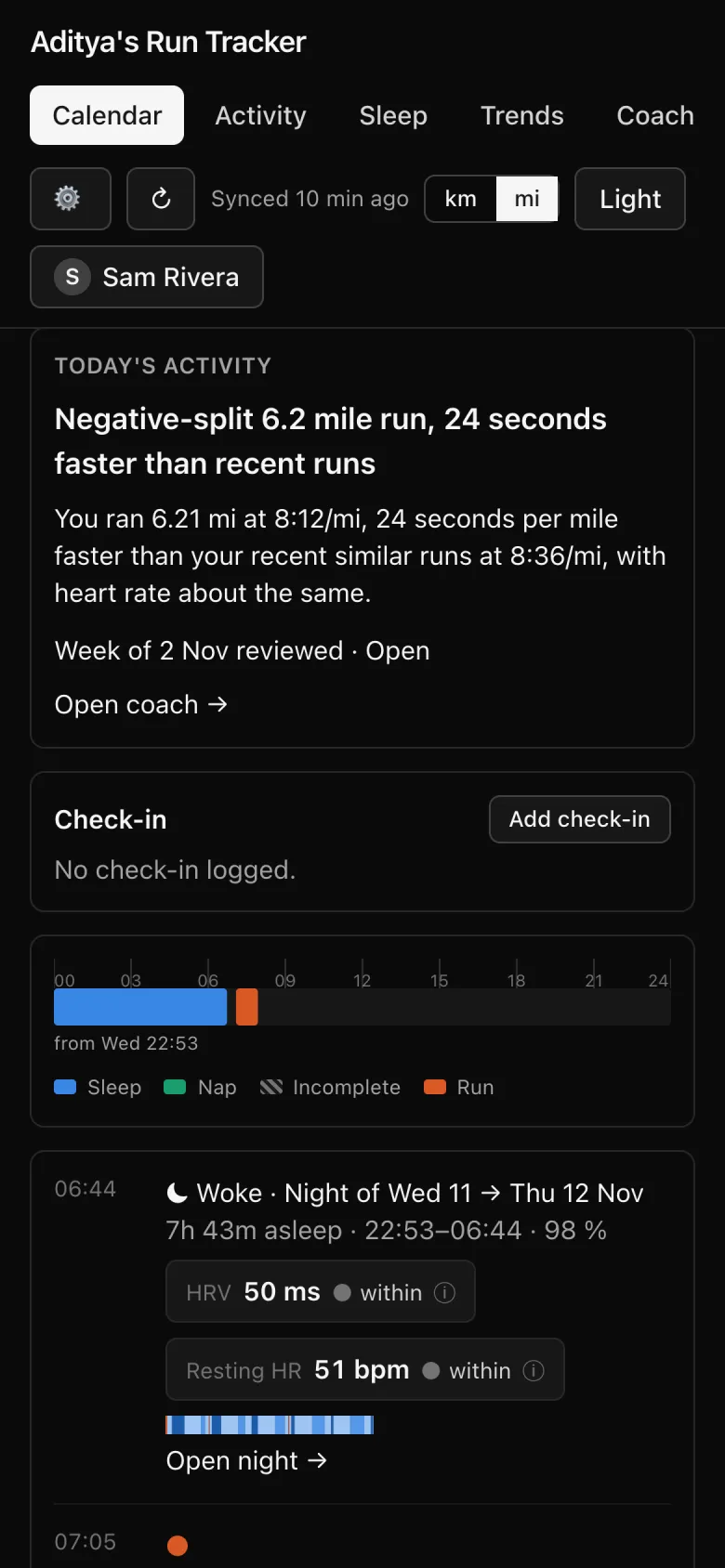
How your splits, heart-rate drift and time in zones compare with your recent runs of the same length.
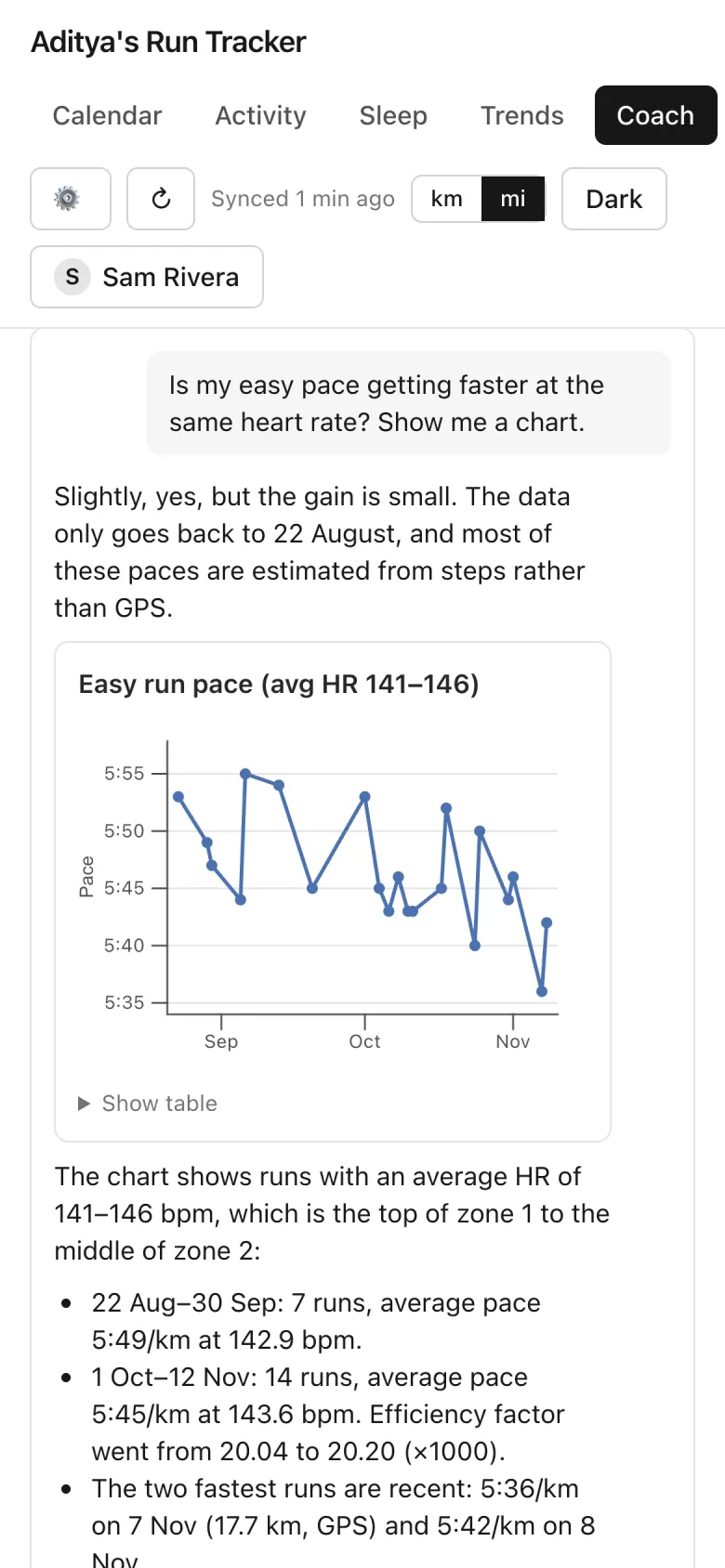
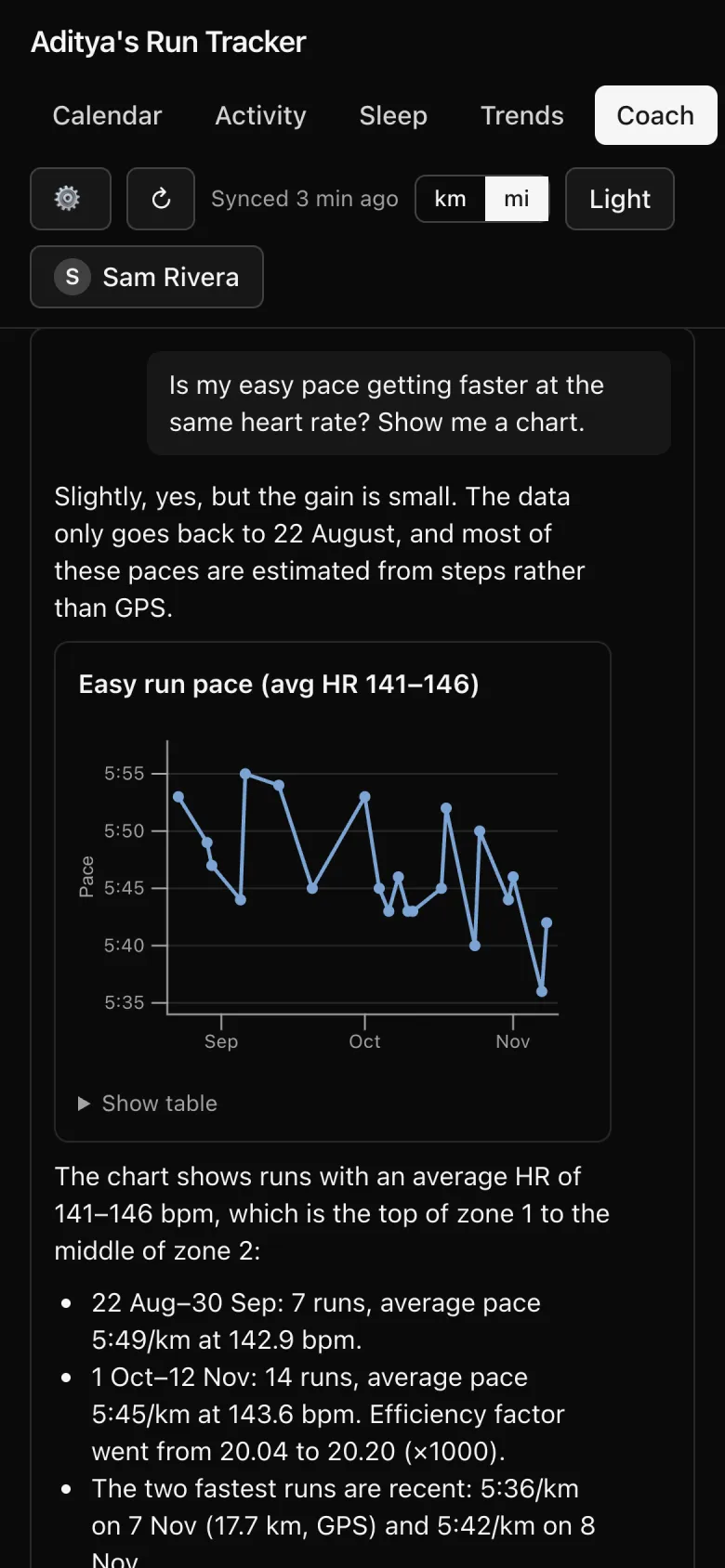
Ask it anything
"Is my easy pace getting faster?" It looks through your data and answers with a chart.
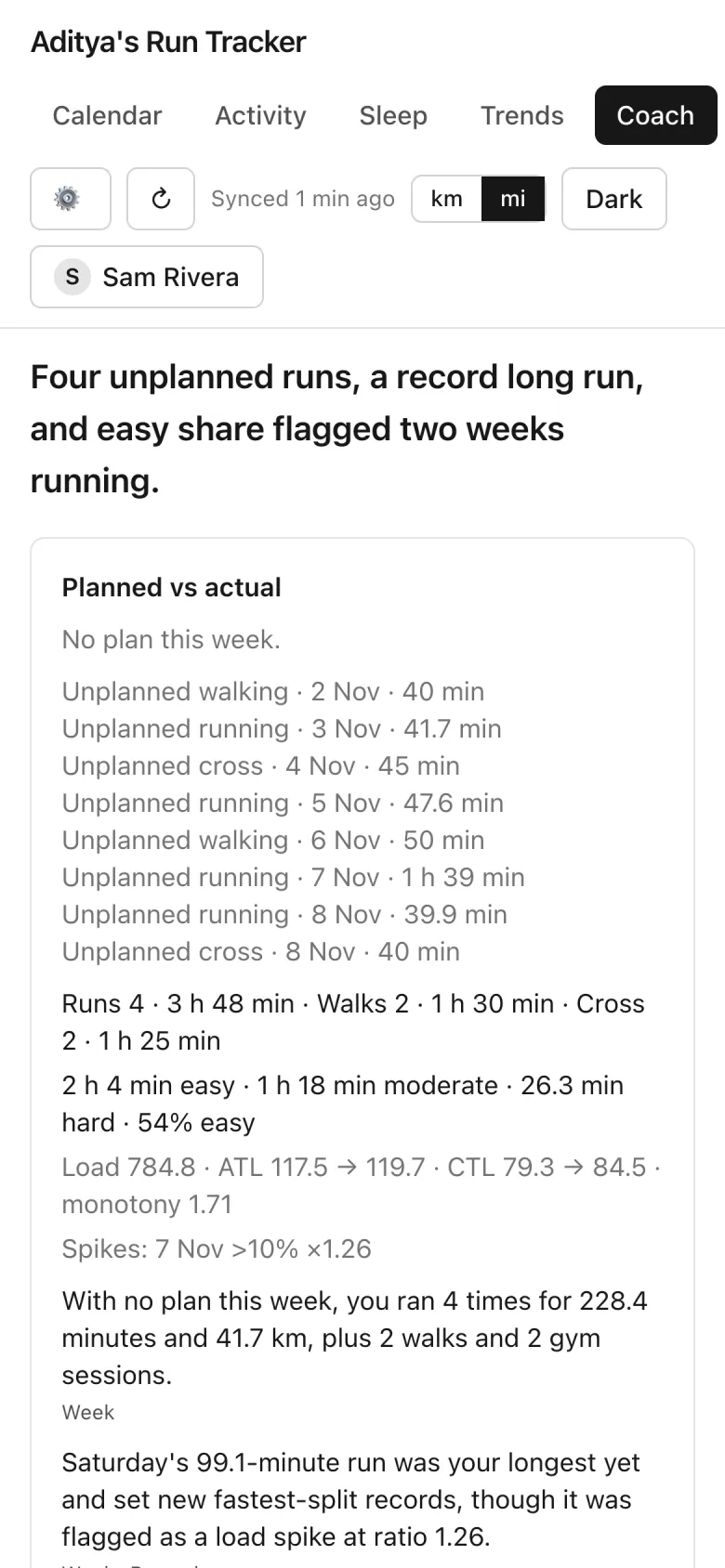
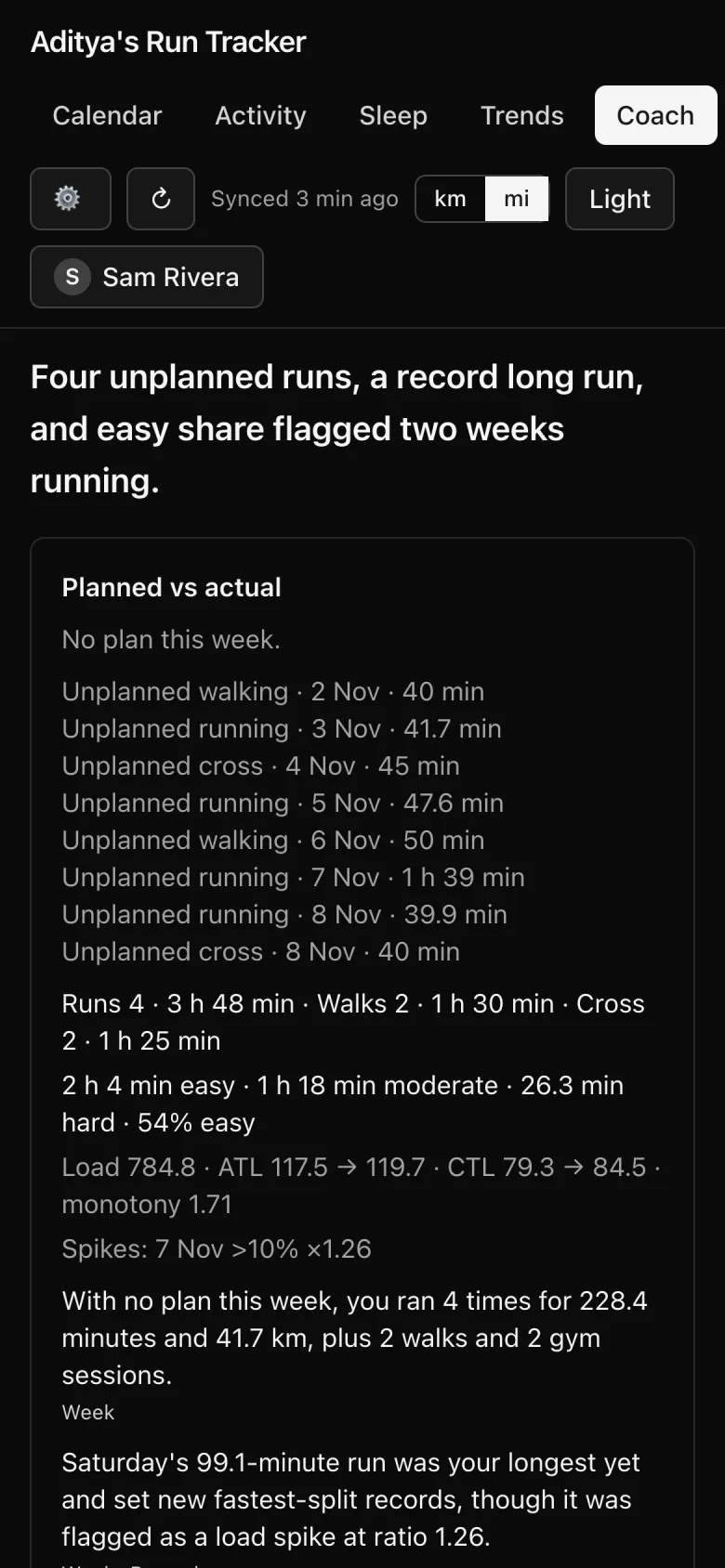
A review every week
Planned against actual, load spikes and new records. If the week went off course, it re-plans from today.
Rules make the call
Go, Ease or Rest comes from ten fixed rules over check-ins, strain signs, HRV, resting heart rate and sleep. You can see which rule decided.
Numbers get checked
Every figure in the coach's text is matched against your data. If one doesn't match, you get the plain facts instead.
An early warning
When HRV drops and resting heart rate climbs together, it flags it, often before you feel ill, and checks whether a hard week explains it.
And the rest of the kit.
One calendar for everything
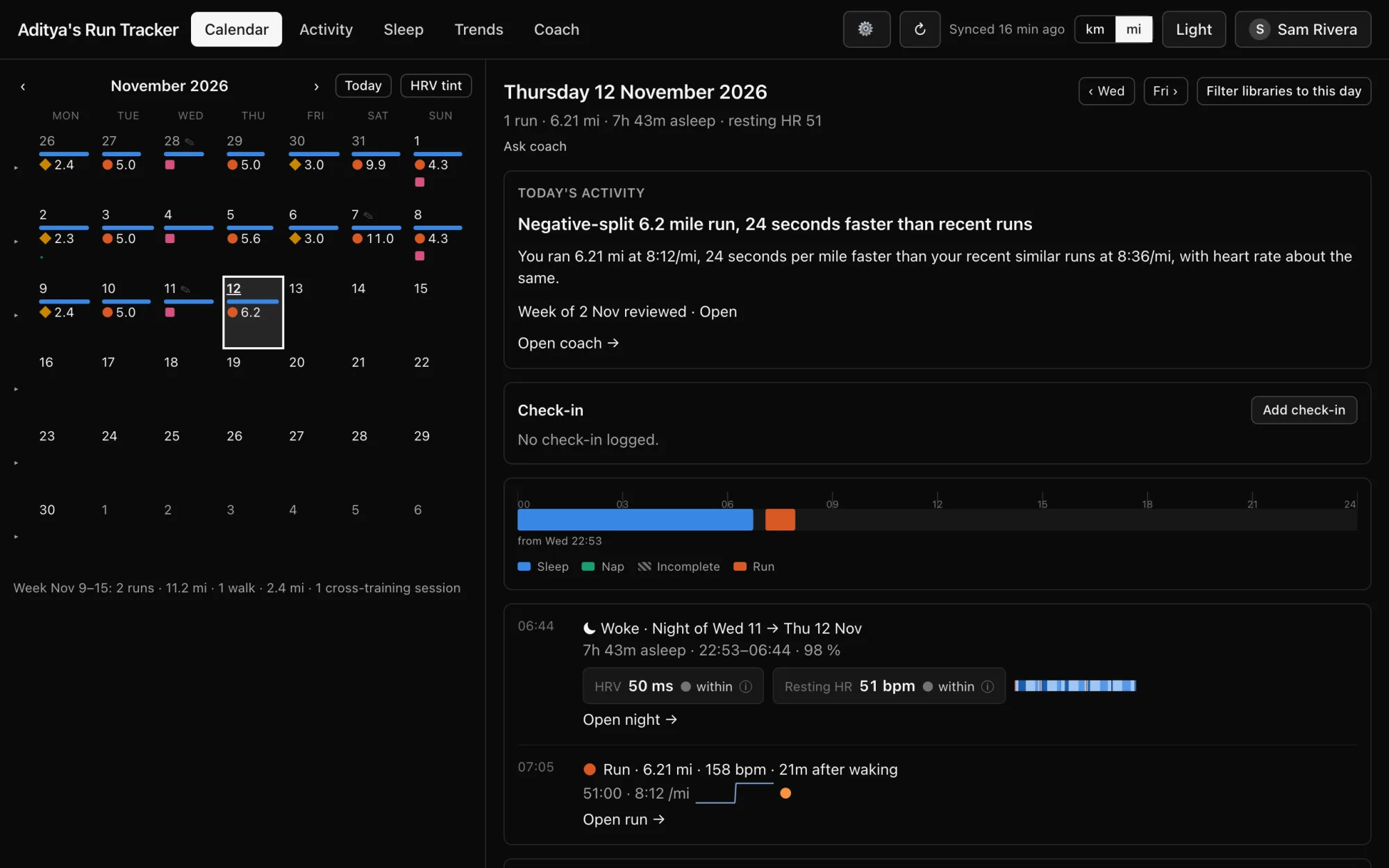
Runs, walks, gym, sleep and naps on one timeline per day. Select a few days to compare them side by side.
Running trends
Weekly mileage, personal bests, a heatmap of your training, and efficiency: how much pace you get for each heartbeat.
Syncs by itself
New runs and nights come in through the day, and again whenever you open the app. Phone and laptop, km or miles, light or dark.
Also wear an Apple Watch?
If an Apple Watch or WHOOP records the same run, the two are merged into one. Your Air's version wins unless you choose otherwise.
Your data stays yours
Each account has its own database. Export it, import it or delete it whenever you like. Your Google sign-in is stored encrypted.
Not a doctor
Everything here is an estimate from a wrist device. The coach says so, and it tells you to see a doctor when it should. It runs on Anthropic's Claude API, which doesn't train on your data.
Take it for a lap.
Twelve weeks of a sample runner's Fitbit Air data: a half marathon plan, a bout of flu, a record long run. Click anything. Your copy resets after 30 minutes.